

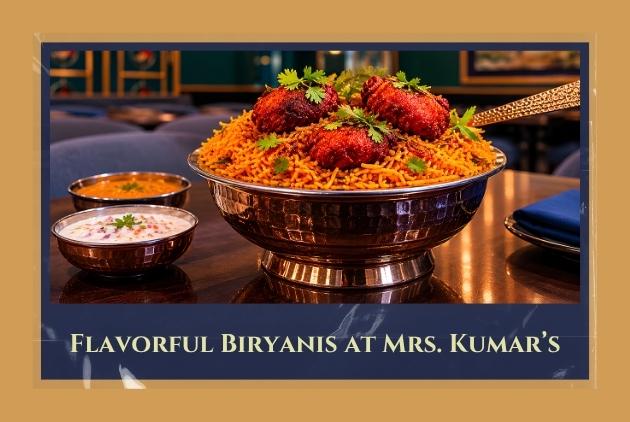
What Makes a Great Biryani? The Art Behind Every Layer
A great biryani is built layer by layer, through fragrant rice, marinated meat, whole spices, saffron, fried onions, and the slow dum technique that brings every element together. At Mrs. Kumar's Indian Cuisine & Bar in Monroe Township, New Jersey, we honor every one of these steps in every pot we prepare. This piece walks through the craft behind a truly great biryani and invites readers to taste it for themselves.
A great biryani looks simple on the plate. What separates a forgettable bowl from an unforgettable one happens long before it ever reaches the table.
At Mrs. Kumar's Indian Cuisine & Bar, we believe biryani is not just a dish. It is a tradition passed down through generations, refined over centuries, and built with patience that cannot be rushed. The roots of biryani trace back to the royal kitchens of Mughal-era India, where Persian slow-cooking techniques met the bold spices of the Indian subcontinent. That history still lives in every pot we prepare today.
This piece breaks down the art behind a truly great biryani, layer by layer. We share what we believe makes the difference between an ordinary biryani and one worth remembering, and why every step matters to us at Mrs. Kumar's.
1. It Starts With the Right Rice
Every great biryani begins with the rice, and not just any rice. We use long-grain, aged basmati rice, known for its delicate aroma and its ability to absorb flavor without turning mushy. Each grain should remain separate and fluffy after cooking, never sticky or clumped together.
This matters more than most diners realize. Rice that is rinsed properly, soaked before cooking, and parboiled to the right point becomes the foundation that carries every other flavor in the dish. Get the rice wrong, and no amount of spice or technique can fully save the biryani.
2. The Marination Makes the Meat
Before a single layer is built, the meat needs time. We marinate our chicken, lamb, and other proteins in a blend of yogurt, ginger, garlic, and a careful balance of spices, allowing the flavors to penetrate deeply rather than sitting on the surface.
This step tenderizes the meat while infusing it with the same spice profile that will carry through the entire dish. Marination is not a step we rush. The longer the meat rests in its marinade, the more flavorful and tender it becomes by the time it reaches the layering stage.
3. Whole Spices, Not Shortcuts
A great biryani is built on whole spices, not pre-ground shortcuts. Cardamom pods, whole cloves, cinnamon sticks, bay leaves, and star anise each release their flavor slowly during cooking, creating layers of aroma that ground spice blends simply cannot replicate.
We toast our spices with intention, allowing each one to bloom before it joins the rice and meat. This is where the warmth of cinnamon, the brightness of cardamom, and the subtle bite of clove all come together to create the signature aroma that fills the room the moment a pot of biryani is opened.
4. The Layering Is the Architecture
Layering is not a presentation choice. It is the architecture of flavor itself. Partially cooked rice and marinated meat are arranged in alternating layers, with each layer receiving its own sprinkle of fried onions, fresh herbs, saffron milk, and ghee.
The bottom layer, closest to the heat, absorbs the richest meat juices and develops the most intense flavor. The middle layers benefit from steam rising from below and settling from above. The top layer carries the lighter, floral notes of saffron and fresh herbs. This is why no two spoonfuls of a well-made biryani taste the same, and why we take the time to layer with precision rather than simply mixing everything together.
5. Dum: The Technique That Ties It All Together
If there is one technique that defines what makes a great biryani, it is dum. The word comes from a Persian term meaning breath or steam, and it describes a method where the layered pot is sealed tightly, trapping steam inside so the rice and meat finish cooking together in their own juices.
This is the technique that dates back to the royal kitchens of Mughal India, and it remains unchanged today because it simply works. Fast cooking creates sharp, separate flavors. Dum cooking creates a rounded, unified flavor where the rice, meat, and spices feel like one dish rather than several components stirred together at the last minute. At Mrs. Kumar's, we never skip this step, because skipping it means skipping the very soul of the dish.
6. Saffron and Fried Onions: The Finishing Touches
Saffron-infused milk, drizzled over the top layer before sealing the pot, gives biryani its signature golden hue and a touch of quiet luxury. Fried onions, crisped slowly until deeply golden, add both a textural crunch and a subtle sweetness that balances the warmth of the spices beneath them.
These finishing touches are small in quantity but significant in impact. A biryani without properly fried onions or real saffron loses much of the depth that separates an exceptional dish from an average one.
7. The Right Pot Matters
The vessel a biryani is cooked in plays a far bigger role than most people expect. A heavy-bottomed handi or Dutch oven distributes heat evenly across the layers, preventing the bottom from burning while the top remains underdone. The narrow neck of a traditional handi also helps trap aroma and steam inside, concentrating flavor rather than letting it escape.
We rely on the same principle in our kitchen. Even heat and a properly sealed pot are not small details. They are the difference between a biryani that cooks evenly through every layer and one that ends up inconsistent from top to bottom.
8. Patience Is the Real Secret Ingredient
After the dum cooking is complete, a great biryani needs to rest before it is served. This resting period allows the steam and flavors trapped inside the pot to settle fully into the rice and meat, rather than rushing straight from heat to plate.
Biryani depends on process far more than it depends on any single ingredient. Rushed biryani never tastes the same as biryani given the time it deserves. At Mrs. Kumar's, patience is not a constraint. It is part of the recipe.
9. Our Promise at Mrs. Kumar's
Every principle above is something we hold ourselves to in our kitchen in Monroe Township. We use premium, organic ingredients. We marinate properly. We layer with intention. We seal and cook on dum. We finish with real saffron and properly fried onions. We let the dish rest before it reaches the table.
Founded in 2018, Mrs. Kumar's has been recognized by NJ.com as one of the best Indian restaurants in New Jersey, not once but twice. We believe that recognition comes from respecting the craft behind every dish we serve, biryani included. Dining with us is never just a meal. It is an experience built on tradition, patience, and genuine Indian hospitality.
Conclusion
A great biryani is never the result of a single ingredient or a single shortcut. It is the rice, the marination, the whole spices, the careful layering, the dum technique, the saffron and fried onions, the right pot, and the patience to let it all come together properly.
We bring every one of these elements to the biryani we serve at Mrs. Kumar's Indian Cuisine & Bar in Monroe Township, New Jersey. We invite readers to experience the difference for themselves, whether dining with us in person or ordering directly through our website for takeout or delivery.
Visit us at Mrs. Kumar's, or place an online order today, and taste what every layer of a truly great biryani should be.
Frequently Asked Questions
Q.1. What is dum cooking and why does it matter for biryani?
Ans: Dum cooking is a slow-cooking technique where a sealed pot traps steam inside, allowing rice, meat, and spices to finish cooking together in their own juices. The word dum comes from a Persian term meaning breath or steam. This technique dates back to the royal kitchens of Mughal India and remains the defining method behind a truly authentic biryani, creating a rounded, unified flavor that quick cooking methods cannot replicate.
Q.2. What is the difference between biryani and pulao?
Ans: The main distinction lies in technique and structure. Biryani consists of layered rice and meat, cooked using the dum method, with stronger and more complex spices. Pulao is typically a one-pot dish where rice and other ingredients are cooked together without distinct layering, and it generally carries a milder flavor profile. Biryani is usually served as the centerpiece of a meal, while pulao often plays a supporting role alongside other dishes.
Q.3. What type of rice is used for great biryani?
Ans: Long-grain, aged basmati rice is the standard choice for authentic biryani. Basmati is prized for its aroma and its ability to absorb the flavors of the marinade, spices, and saffron without becoming mushy or sticky. Properly rinsed and soaked rice, parboiled to the right point before layering, is essential to achieving the light, separate grains that define a well-made biryani.
Q.4. Why is biryani layered instead of mixed?
Ans: Layering allows each part of the dish to develop a distinct character during cooking. The bottom layer absorbs the most intense meat juices, the middle layers benefit from steam rising and settling from both directions, and the top layer carries the lighter, floral notes of saffron and fresh herbs. This creates variation from spoonful to spoonful, which a fully mixed dish cannot achieve.
Q.5. Where can I get authentic biryani in Monroe Township, NJ?
Ans: Mrs. Kumar's Indian Cuisine & Bar, located in Monroe Township, New Jersey, serves authentic, traditionally prepared biryani made with premium, organic ingredients and time-honored cooking techniques. Recognized twice by NJ.com as one of the best Indian restaurants in New Jersey, Mrs. Kumar's welcomes guests for dine-in, takeout, and delivery, with online ordering available directly through the restaurant's website.
Recent Post


